What an Epoxy Garage Floor Job Involves
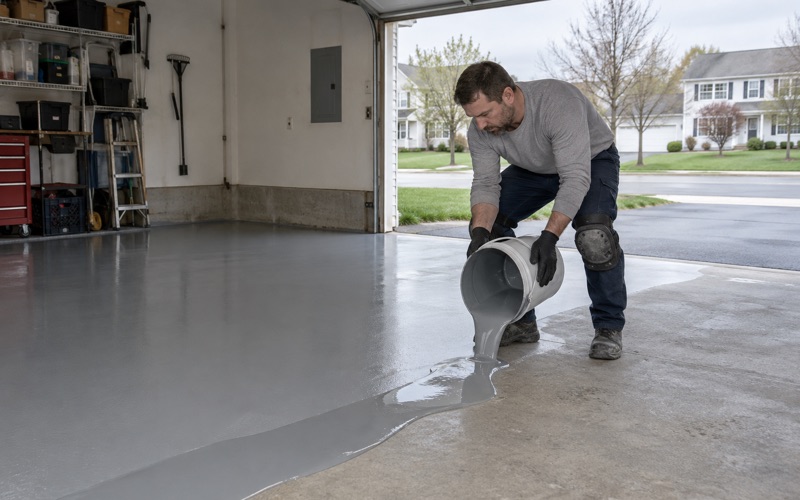
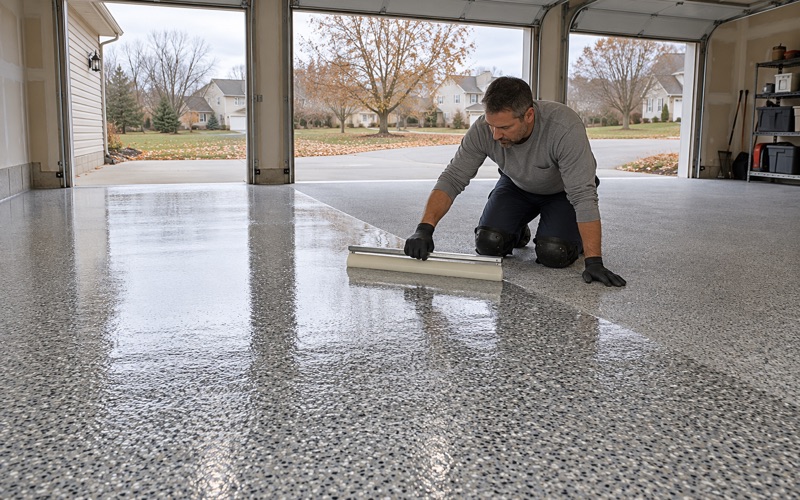
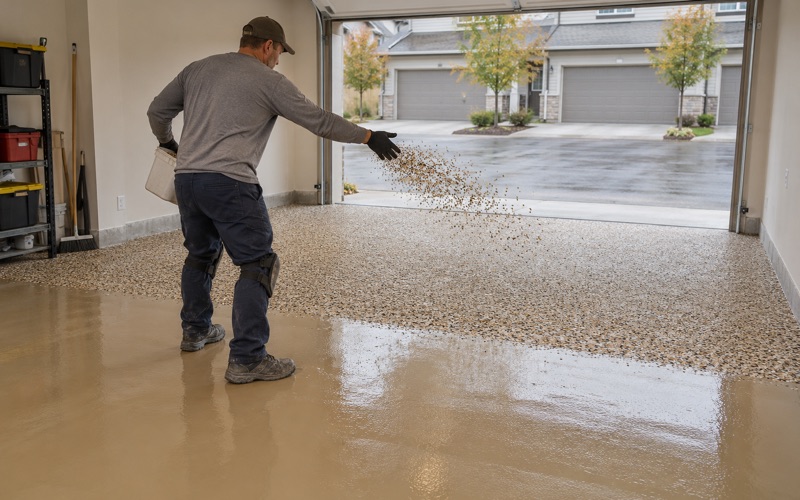
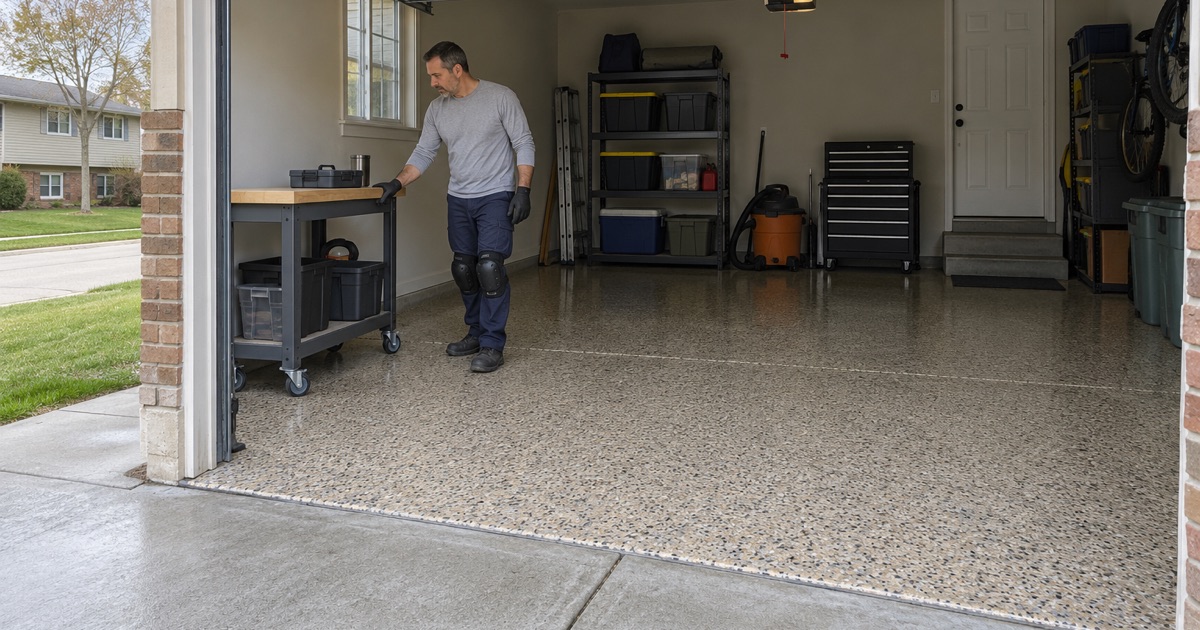
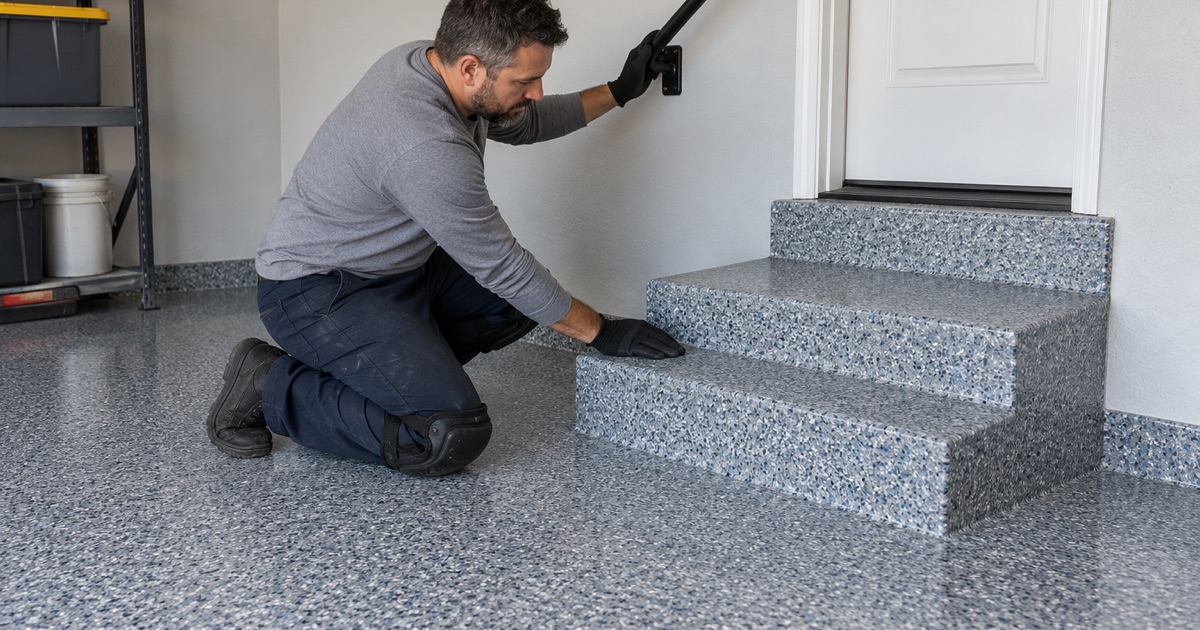
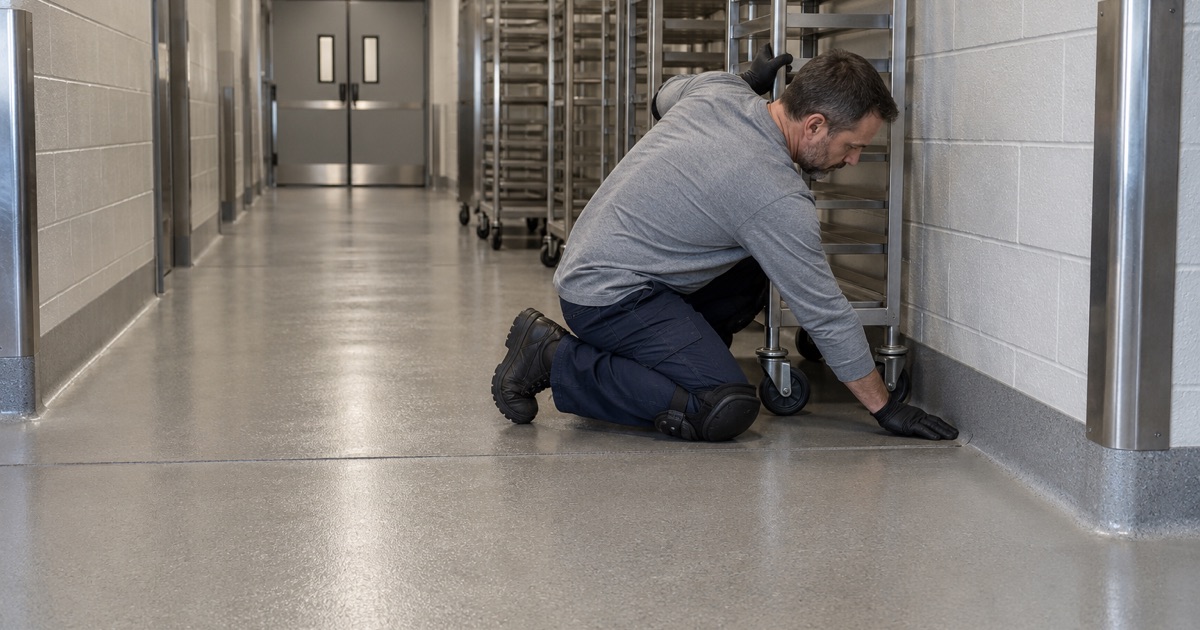
A professional epoxy garage floor starts with a walk-through of the slab, then grinding, crack and spall repair, a primer or base coat, a flake or color layer and a clear topcoat. We plan each step against your floor’s condition, so you know before we arrive how many days the garage will be out of use.
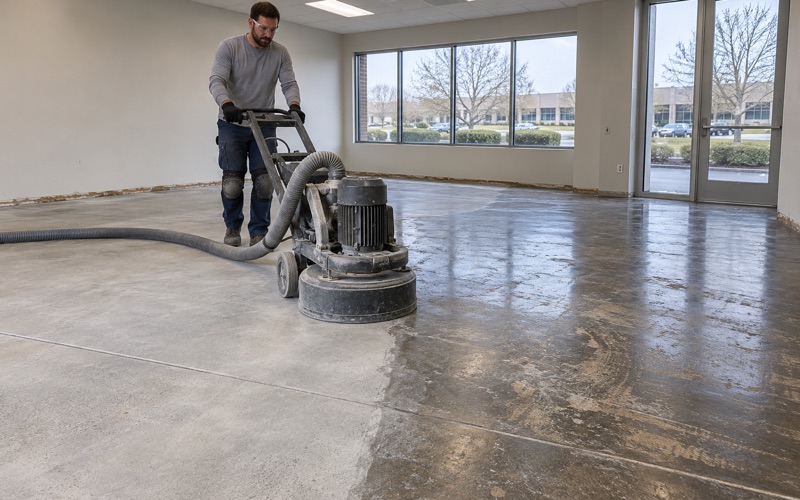
Diamond Grinding Before Any Garage Coating
Concrete that has been sealed, painted or troweled glassy gives resin nothing to grip, and a coating laid over it peels in sheets. We grind every garage slab open to the ICRI concrete surface profile the system calls for, because that profile is what keeps the coating attached once hot tires and road salt go to work on it.
Moisture Testing a Garage Slab
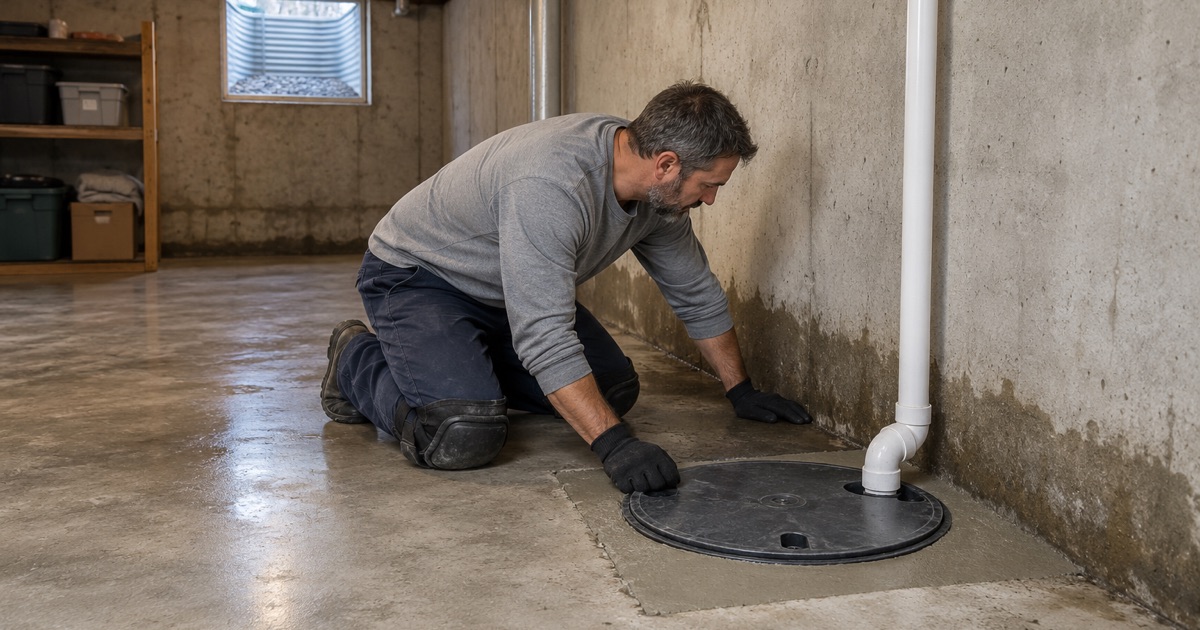
The model residential code exempts garage slabs from the vapor retarder required under living space, so a newer garage can sit directly on wet ground. We test with an ASTM F2170 in-situ relative humidity probe or an ASTM F1869 calcium chloride kit before coating, and the reading decides whether the floor needs a moisture-mitigation primer.
Reading the Cracks Already in Your Floor
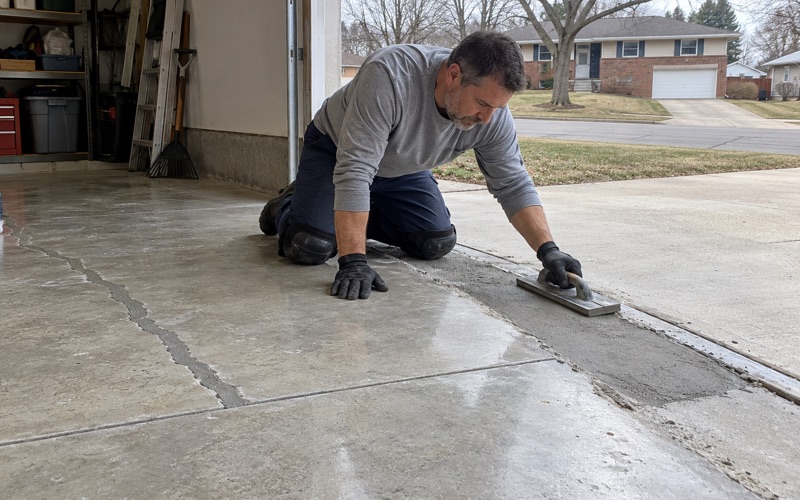
A hairline shrinkage crack, a settled control joint and a crack that opens every winter are three different problems. We map the cracks, fill the stable ones with a rigid repair material, and tell you which ones are likely to show again, because a coating follows the slab beneath it and cannot hold a moving crack shut.
Calcium Chloride Brine on Bare Concrete
Calcium chloride and rock salt dissolve into brine that soaks into bare concrete, recrystallizes as it dries and slowly scales the surface. A sealed, coated garage floor keeps that brine on top where it can be squeegeed out, which is why the topcoat on an Illinois garage earns more of its keep than the color layer under it.
Coating a Garage in a Northern Illinois Winter
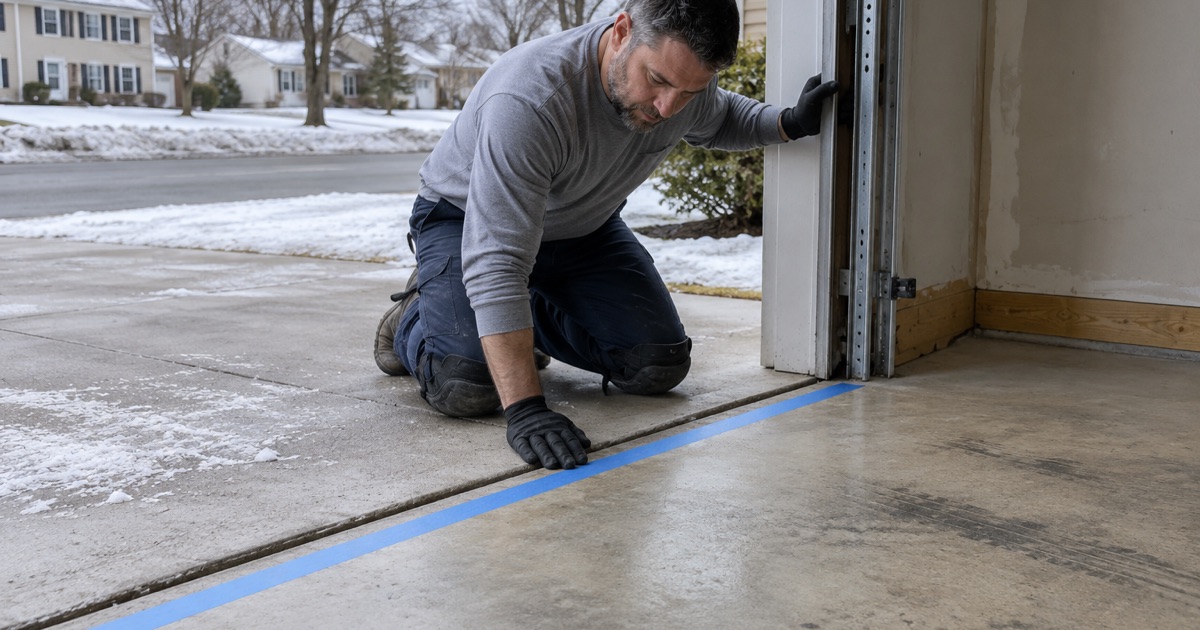
Resins need the slab, not just the air, to stay warm enough through the cure. In an unheated garage in deep winter the concrete holds the cold long after a space heater warms the air, and coating it then invites amine blush and a soft finish. We measure the slab and the dew point spread, and we move the date when the readings say to.
Hot Tire Pickup on Garage Coatings
Hot tire pickup is what happens when a warm tire softens a thin coating and lifts it from the concrete as the car pulls away. It is most common on single-component garage paints and thin kits over poorly prepared slabs, and it is prevented by a ground surface, a true 100% solids epoxy or polyaspartic system, and the full cure time.
Epoxy Garage Floor Kits Compared With a Pro Install
A kit from the store usually relies on an acid etch, a thin water-based coat and a scattering of flakes, and it is applied on the homeowner’s schedule rather than the slab’s. A professional system differs in the grinder, the film thickness, the moisture test and the topcoat, which is why a kit floor often needs stripping before a lasting one can go down.
What an Epoxy Garage Floor Costs
The number moves with the slab’s condition more than its size. Crack and spall repair, the moisture result, the base resin, the flake density and the topcoat each change the price, and a quote that leaves one of them unnamed is not comparable to one that names them all. Ours names them, so you can see where each dollar goes.
Four Times Stronger Than Epoxy: What the Claim Compares
Some polyaspartic and polyurea products are sold as several times stronger than epoxy, and the claim usually compares one property, often flexibility or abrasion, against one particular epoxy. We explain what each material is better at, because a garage floor needs bond, build and salt resistance together, and no single strength figure measures all three.
Townhome and Condominium Garage Floors
Schaumburg has a large share of attached townhomes, where garages share walls, drives and an association’s rules. We schedule around those rules, keep the neighbors’ access to their own garages open, contain grinding dust, and get the association’s sign-off on color or flake before the first coat rather than after the last.
What a Coating Warranty Usually Excludes
Moisture vapor pushing up through the slab is the first exclusion on nearly every floor coating warranty, followed by impact damage, chemical spills and movement in the concrete itself. We read the exclusions out before the job is sold, with moisture first, because that is the exclusion a homeowner most often learns about after a blister appears.